10 Best Long-Term Financial Goals For 2026, How to Achieve
 Muhammad Faraz
10 Best Long-Term Financial Goals For 2026, How to Achieve
Building lasting wealth and achieving true financial freedom doesn’t happen by accident—it’s the direct result of setting and pursuing powerful long-term financial goals. This definitive guide breaks down the 10 most impactful objectives for investors and savers in the US, UK, and Canada. Learn how to define, calculate, and systematically achieve these goals to secure your future, retire comfortably, and build a legacy.
What are Long Term Financial Goals
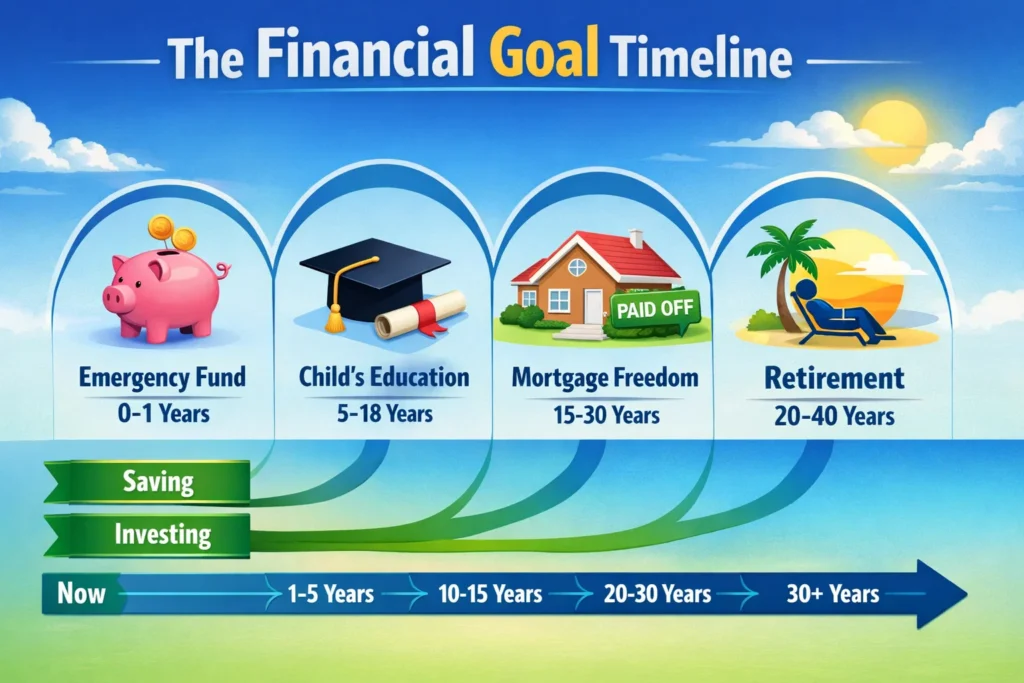
Long-term financial goals are specific, measurable monetary objectives set with a time horizon typically exceeding five years, often extending decades into the future. Unlike short-term targets like saving for a vacation, these goals form the backbone of your financial life plan and require consistent, disciplined action and strategic asset allocation. They are essential for major life milestones such as achieving financial independence, funding a comfortable retirement, purchasing a home free of mortgage debt, or paying for a child’s university education. Think of them as the destination on your financial roadmap; they determine the direction of your savings rate, investment strategy, and spending habits today.
Key Takeaways
Focus Centric Goal Selection
| Your Primary Long-Term Goal | Best Account Type | Key Strategic Focus |
|---|---|---|
| Retirement Comfort | Employer 401(k)/SIPP, IRA/ISA | Max tax-advantaged contributions, diversified portfolio. |
| Wealth Building | Taxable Brokerage Account | Low-cost index funds, tax-efficient investing, consistent deposits. |
| Education Funding | 529 Plan (US)/Junior ISA (UK) | Age-based asset allocation, starting early to leverage time. |
| Legacy & Estate | Trusts, Beneficiary Designations | Estate planning with a professional, proper insurance coverage. |
For UK-based investors, long-term goals often center around maximizing contributions to a Stocks and Shares ISA and a personal pension (SIPP). The Lifetime ISA (LISA) is also a powerful tool for first-time home buyers or retirement saving for those under 40. In the US, the triad of 401(k), IRA, and HSA accounts forms the core of most long-term plans, with 529 Plans being critical for education.
Top 10 Long Term Financial Goals for 2026
Moving from abstract ideas to concrete targets is what transforms dreams into achievable plans. These ten long-term financial goals are recognized by financial advisors and successful investors worldwide as the most impactful for building lasting security and wealth. We break down each goal, explaining its importance, how to calculate your specific target, and the actionable steps to get started.
1. Achieve Financial Independence / Retire Early (FIRE)
Overall Score: 5/5
Best For: Individuals seeking autonomy from mandatory employment, willing to live below their means to accelerate savings.
The FIRE movement is about building a substantial investment portfolio that generates enough passive income (via dividends, interest, or safe withdrawal rates) to cover your living expenses indefinitely. This allows you to “retire” from traditional work decades early or pursue passions without financial pressure. It’s not about extreme frugality forever, but about maximizing savings during high-earning years to buy freedom and flexibility later in life. The core principle is calculating your “FIRE number” (25x your annual expenses) and relentlessly investing towards it.
Key Features:
- Target Calculation: Annual Expenses x 25 (based on the 4% safe withdrawal rule).
- Primary Vehicle: Tax-advantaged accounts (401k, IRA) and taxable brokerage accounts.
- Asset Allocation: Heavily weighted towards equities for growth during accumulation.
- Mindset: High savings rate, conscious spending, geographic arbitrage potential.
- Ultimate Financial Freedom: Provides complete control over your time and life choices.
- Compounds Quickly: The extreme savings rate accelerates portfolio growth dramatically.
- Forces Financial Literacy: Achieving FIRE requires deep understanding of investing, taxes, and expenses.
- Hedge Against Job Loss: A large portfolio provides immense career security and negotiation power.
- Requires Major Sacrifice: A 50%+ savings rate is not feasible or desirable for everyone.
- Sequence of Returns Risk: Early market downturns after retirement can threaten the plan.
- Healthcare Cost Uncertainty: In the US, securing affordable health insurance pre-Medicare is a major hurdle.
- Potential for Burnout: The intense focus on saving can lead to an imbalanced life if not managed.
Why We Ranked It #1: We placed FIRE as the top goal because it represents the most profound shift in financial mindset: from trading time for money to having your assets work for you. Even if the extreme version isn’t your aim, adopting its principles, aggressive saving, low-cost investing, and a focus on financial independence will radically improve any long-term financial plan.
2. Fund a Fully Independent Retirement
Overall Score: 5/5
Best For: Everyone, regardless of career path or income level
This is the foundational long-term goal for financial security. Unlike FIRE, which targets early exit from traditional work, a fully independent retirement focuses on building sufficient assets to comfortably maintain your lifestyle from a traditional retirement age (65-70) through the end of life. This goal considers inflation, healthcare costs, and potential long-term care needs. The strategy revolves around maximizing tax-advantaged accounts like 401(k)s, IRAs, and pensions while maintaining a diversified portfolio that balances growth and risk management as you approach retirement age. It’s about creating a paycheck that doesn’t come from working.
Key Features:
- Target Calculation: 25x annual retirement expenses (4% rule) or use retirement calculators
- Primary Vehicles: 401(k), IRA, Roth IRA, Pension Plans, Social Security optimization
- Asset Allocation: Shifts from growth-heavy to balanced/conservative near retirement
- Healthcare Planning: Medicare enrollment, supplemental insurance, HSA utilization
- Withdrawal Strategy: Systematic withdrawal plans, required minimum distributions (RMDs)
- Longevity Planning: Assets must last 25-30+ years post-retirement
- Universal Applicability: Every working person needs a retirement plan.
- Tax Advantages: Multiple account types offer tax-deferred or tax-free growth.
- Employer Matching: Many workplaces offer free money through 401(k) matches.
- Social Security Integration: Government benefits provide a foundational income floor.
- Predictable Timeline: Standard retirement age provides clear target date.
- Abundant Resources: Extensive research, calculators, and professional guidance available.
- Long Time Horizon: Requires discipline over decades with delayed gratification.
- Inflation Risk: Must invest aggressively enough to outpace inflation over 30+ years.
- Healthcare Uncertainty: Rising medical costs can derail even well-planned retirements.
- Market Timing Risk: Poor sequence of returns near retirement can significantly impact outcomes.
- Complexity of Withdrawal: Tax implications and RMD rules require careful planning.
- Potential Underfunding: People consistently underestimate how much they’ll need.
Why We Picked It: We ranked traditional retirement funding as the #2 goal because it’s non-negotiable for financial security in later life. Even those pursuing FIRE must first master traditional retirement principles. The tools, accounts, and strategies for this goal are well-established, heavily researched, and supported by extensive financial infrastructure. It serves as the bedrock upon which all other wealth-building goals are constructed.
3. Become Completely Debt-Free (Including Mortgage)
Overall Score: 4.8/5
Best For: Individuals feeling burdened by monthly payments, risk-averse investors, those seeking financial peace
This goal represents the ultimate form of financial security—owing nothing to anyone. It progresses through two phases: first eliminating high-interest consumer debt (credit cards, personal loans), then tackling mortgage debt. The psychological benefits are immense: reduced stress, increased cash flow flexibility, and immunity to interest rate hikes. While mathematically it sometimes makes sense to carry low-interest mortgage debt while investing, the emotional and practical freedom of being completely debt-free is invaluable for many. This goal transforms your personal balance sheet from liability-heavy to asset-strong.
Key Features:
- Debt Avalanche Method: Pay minimums on all debts, put extra toward highest interest rate debt
- Debt Snowball Method: Pay minimums on all debts, put extra toward smallest balance first
- Mortgage Acceleration: Make bi-weekly payments, add extra principal payments annually
- Refinancing Strategy: Secure lower interest rates when advantageous
- Cash Flow Liberation: Each paid-off debt frees up monthly income for other goals
- Credit Score Impact: Strategic payoff can actually improve credit utilization ratios
- Psychological Freedom: Eliminates stress and anxiety associated with debt payments.
- Improved Cash Flow: Every paid-off debt increases monthly disposable income.
- Risk Mitigation: Being debt-free provides stability during economic downturns or job loss.
- Interest Savings: Avoids paying tens or hundreds of thousands in interest over time.
- Simplified Finances: Fewer accounts to manage, fewer monthly payments.
- Increased Investment Capacity: Freed-up payments can be redirected to wealth-building.
- Opportunity Cost: Money used for aggressive debt payoff could potentially earn higher returns in markets.
- Liquidity Reduction: Extra mortgage payments tie up cash in home equity that’s not easily accessible.
- Tax Deduction Loss: In some countries, mortgage interest is tax-deductible (though usually outweighed by interest costs).
- Delayed Other Goals: Aggressive debt repayment may delay retirement or education funding.
- Requires Lifestyle Sacrifice: Often necessitates cutting discretionary spending significantly.
- Mathematically Suboptimal: Low-interest debt (<4%) is often cheaper than potential investment returns.
Why We Picked It: We selected complete debt freedom as #3 because it represents a psychological milestone that transforms one’s relationship with money. The guaranteed “return” from paying off debt (the interest you don’t pay) is risk-free, which appeals to conservative investors.
4. Build a Robust Investment Portfolio for Generational Wealth
Overall Score: 4.7/5
Best For: High earners, business owners, those with inheritance, anyone wanting to leave a legacy
This goal moves beyond personal financial security to creating lasting wealth that can benefit multiple generations. It involves building a substantial taxable investment portfolio separate from retirement accounts, focused on long-term growth, tax efficiency, and eventual wealth transfer. The strategy emphasizes consistency (regular contributions), diversification (across asset classes and geographies), and patience (decades-long time horizon). This portfolio might include individual stocks, ETFs, real estate investment trusts (REITs), and potentially private equity or angel investments for sophisticated investors. The focus is on growing capital while minimizing tax drag through strategies like tax-loss harvesting and holding investments long-term for favorable capital gains treatment.
Key Features:
- Taxable Brokerage Account: Primary vehicle for accessible, flexible investing
- Dollar-Cost Averaging: Regular investments regardless of market conditions
- Low-Cost Index Funds/ETFs: Foundation for broad market exposure with minimal fees
- Tax-Efficient Placement: Bonds in tax-advantaged accounts, equities in taxable
- Dividend Reinvestment: Automatically compounds growth
- Estate Planning Integration: Trusts, gifting strategies, beneficiary designations
- Legacy Creation: Can provide for children, grandchildren, or charitable causes.
- Financial Flexibility: Accessible funds without retirement account penalties.
- Compounding Magnified: Additional decades of growth beyond retirement needs.
- Tax Planning Opportunities: More control over timing of capital gains realization.
- Diversification: Reduces reliance on any single asset (like a home or business).
- Professional Development: Building such a portfolio deepens financial knowledge.
- Capital Intensive: Requires substantial surplus income after other goals are funded.
- Tax Complexity: Requires understanding of capital gains, dividends, and tax strategies.
- Market Risk Exposure: Larger portfolio means larger absolute dollar losses in downturns.
- Family Dynamics Risk: Wealth transfer can create dependency or conflict among heirs.
- Time Intensive: Proper management requires regular attention and rebalancing.
- Estate Tax Implications: Very large portfolios may trigger estate taxes requiring advanced planning.
Why We Picked It: We included generational wealth building as #4 because it represents the pinnacle of financial planning—moving from security to significance. This goal forces investors to think beyond their own lifespan and consider their impact on future generations.
5. Fully Fund Your Children’s Education
Overall Score: 4.6/5
Best For: Parents, grandparents, anyone wanting to support a child’s future without student loans
This goal involves systematically saving for a child’s post-secondary education expenses, aiming to cover tuition, room, board, and associated costs without requiring the child to take on burdensome student debt. The power of this goal lies in its long time horizon—18+ years from birth to college—allowing compound growth to do most of the work. Strategic use of tax-advantaged accounts like 529 Plans (US) or Registered Education Savings Plans (Canada) provides additional growth benefits. The goal requires balancing education funding with retirement savings, as parents cannot borrow for retirement but children can borrow for education (though not ideally).
Key Features:
- 529 Plans/Education Savings Accounts: Tax-advantaged vehicles for education savings
- Age-Based Portfolios: Automatically shift from aggressive to conservative as college approaches
- Gifting Opportunities: Grandparents and others can contribute directly to accounts
- State Tax Benefits: Many US states offer tax deductions for 529 contributions
- Flexibility: Funds can be used for trade schools, apprenticeships, and some K-12 expenses
- Ownership Control: Account owner (usually parent) controls funds, not the child
- Debt Prevention: Spares children from starting adulthood with significant student loans.
- Tax Advantages: Earnings grow tax-free when used for qualified education expenses.
- Compounding Benefits: Starting at birth maximizes growth potential.
- Financial Literacy Teaching: Involve children in the process to teach money management.
- Reduced Family Stress: Eliminates future financial pressure when college decisions are made.
- Flexible Use: Funds can be used for various educational paths beyond traditional 4-year college.
- Opportunity Cost: Money saved for education could instead accelerate retirement or other goals.
- Penalties for Non-Education Use: Withdrawals for non-qualified expenses incur taxes and penalties.
- Financial Aid Impact: Parent-owned assets can reduce need-based aid eligibility.
- Overfunding Risk: If child doesn’t pursue higher education, funds face penalties or need redirection.
- Inflation Uncertainty: Education costs have historically risen faster than general inflation.
- Sibling Equity Issues: Requires careful planning if multiple children have different educational paths.
Why We Picked It: We selected education funding as #5 because it represents a critical intersection of family values and financial planning. The cost of higher education has become a significant barrier for many families, and proactive planning can remove this obstacle.
6. Purchase Investment or Passive Income Property
Overall Score: 4.5/5
Best For: Hands-on investors, those seeking tangible assets, individuals wanting cash flow diversification
This goal involves acquiring real estate specifically for generating rental income and/or long-term appreciation, creating a tangible asset that produces regular cash flow. It moves beyond primary residence ownership into the realm of active or passive business ownership. Successful real estate investing requires understanding local markets, property management (either personally or through professionals), financing strategies, and tax implications. The goal can range from a single rental property to a portfolio of units, with strategies including long-term rentals, short-term/vacation rentals, or commercial properties. Real estate offers unique advantages including leverage (using mortgages to control large assets), tax benefits (depreciation, deductions), and inflation hedging.
Key Features:
- Cash Flow Analysis: Calculate net operating income, cap rates, cash-on-cash returns
- Financing Strategies: Conventional mortgages, portfolio loans, hard money for renovations
- Property Management: Self-management vs. professional management companies
- Tax Advantages: Depreciation, mortgage interest deduction, 1031 exchanges
- Due Diligence: Property inspections, market analysis, tenant screening processes
- Exit Strategies: Long-term hold, fix-and-flip, BRRRR (Buy, Rehab, Rent, Refinance, Repeat)
- Cash Flow Generation: Provides regular monthly income separate from employment.
- Appreciation Potential: Real estate historically appreciates over long periods.
- Leverage: Control substantial assets with relatively small down payments.
- Tax Benefits: Multiple deductions and depreciation reduce taxable income.
- Inflation Hedge: Rental income and property values tend to rise with inflation.
- Tangible Asset: Psychological comfort of owning physical property.
- Illiquidity: Difficult and slow to convert to cash compared to stocks/bonds.
- Management Intensive: Requires time for maintenance, tenant issues, and administration.
- Concentration Risk: Individual properties carry location-specific risks.
- High Transaction Costs: Significant fees for purchase, sale, and refinancing.
- Liability Exposure: Property owners face potential legal and insurance risks.
- Market Cycle Risk: Local real estate markets can experience prolonged downturns.
Why We Picked It: We included real estate investing as #6 because it represents a powerful diversification strategy beyond paper assets. For individuals who prefer tangible investments or want more control over their income streams, real estate offers unique advantages.
7. Build a Substantial Emergency & Opportunity Fund
Overall Score: 4.9/5
Best For: Risk-averse individuals, entrepreneurs, career changers, those in volatile industries, anyone wanting ultimate financial security
This goal elevates the traditional emergency fund concept to a strategic financial position. Instead of just covering 3-6 months of basic expenses during job loss or emergencies, this extended fund serves dual purposes: providing iron-clad security against prolonged income disruption AND creating a “war chest” to capitalize on strategic opportunities without taking on debt. These opportunities might include investing during market downturns, funding a business idea, making a career change, or purchasing assets at distressed prices. The fund is held in highly liquid, low-risk vehicles like high-yield savings accounts, money market funds, or short-term treasury bills, preserving capital while earning some return above traditional savings rates.
Key Features:
- Extended Time Horizon: 12-24 months of essential living expenses covered
- Dual-Purpose Structure: Separate mental (or actual) buckets for emergencies vs. opportunities
- Liquidity Priority: Funds must be accessible within days, not weeks or months
- Yield Optimization: Parked in highest-yielding safe vehicles (HYSA, money markets, T-bills)
- Replenishment Protocol: Clear rules for rebuilding after withdrawals
- Inflation Consideration: Regular adjustment of target amount for cost-of-living increases
- Ultimate Financial Security: Virtually eliminates stress about job loss, medical emergencies, or major repairs.
- Opportunity Readiness: Enables quick action on investments, business ventures, or career moves without financing.
- Reduced Decision Pressure: Allows saying “no” to unfavorable situations without financial desperation.
- Career Flexibility: Provides runway to leave toxic jobs or pursue passion projects.
- Peace of Mind: Psychological benefits of knowing you can handle virtually any financial curveball.
- Negotiation Power: In job, business, or purchase negotiations when you don’t “need” the deal.
- Significant Opportunity Cost: Large sums earning low returns instead of being invested in higher-yielding assets.
- Inflation Erosion: Real purchasing power declines over time in low-yield vehicles.
- Psychological Temptation: Easy access to large sums may encourage non-essential spending.
- Capital Intensive: Requires diverting substantial funds that could accelerate other goals.
- Management Required: Needs active monitoring to ensure funds remain in optimal vehicles.
- Potential Complacency: Over-reliance on fund might reduce urgency in income generation.
Why We Picked It: We included this as goal #7 because it represents the ultimate form of financial optionality. While mathematically suboptimal compared to full investment, the psychological and strategic benefits are immense. This goal creates what military strategists call strategic depth, the ability to withstand setbacks and choose optimal timing for offensive moves.
8. Achieve a Specific Net Worth Milestone
Overall Score: 4.4/5
Best For: Competitive individuals, data-driven planners, those seeking tangible progress metrics, people who thrive on milestones
This goal uses specific net worth targets as motivational benchmarks and comprehensive measures of overall financial health. Unlike income-focused goals, net worth accounts for both asset accumulation and debt reduction, providing a holistic picture of wealth. Common milestones include $100K, $500K, $1M (millionaire status), $2M, etc. The process involves regular calculation (assets minus liabilities), strategic allocation to increase assets while decreasing liabilities, and tracking progress toward the next milestone. This goal encourages a balance sheet mindset rather than just an income statement focus, promoting both wealth building and prudent debt management. It’s particularly effective for visual learners who benefit from seeing their financial progress charted over time.
Key Features:
- Comprehensive Tracking: Regular (quarterly/annual) calculation of all assets and liabilities
- Dual-Pronged Strategy: Focus on both asset growth (investments, real estate) and liability reduction (debt payoff)
- Milestone Breakdown: Large targets broken into smaller, achievable sub-goals
- Progress Visualization: Charts, graphs, or apps to track net worth trajectory
- Benchmarking: Comparison against age/income peer groups (for motivation, not competition)
- Celebration Rituals: Recognizing achievement of each milestone to maintain motivation
- Holistic Financial View: Forces consideration of entire financial picture, not just income or savings.
- Motivational Power: Clear numerical targets provide concrete goals to work toward.
- Progress Measurement: Easy to track and see improvement over time.
- Balanced Strategy: Encourages both wealth accumulation AND debt reduction.
- Financial Literacy: Requires understanding of different asset classes and their valuation.
- Retirement Readiness Indicator: Net worth milestones correlate strongly with retirement preparedness.
- Comparison Trap: Can foster unhealthy competition or discouragement when comparing to others.
- Market Volatility Stress: Fluctuations in investment or real estate values can create emotional rollercoaster.
- May Encourage Risk: Some might take excessive risks to hit targets faster.
- Incomplete Picture: Doesn’t account for cash flow, quality of life, or non-financial wealth.
- Potential for Game-Playing: Might encourage behavior focused on hitting numbers rather than sound financial decisions.
- Discouragement Risk: Market downturns can make previously achieved milestones seem out of reach again.
Why We Picked It: We selected net worth milestones as goal #8 because they provide a comprehensive, measurable framework that encompasses multiple aspects of financial health. For analytically-minded individuals, this goal turns personal finance into a game with clear rules and score-keeping.
9. Start and Grow a Successful Business
Overall Score: 4.3/5
Best For: Entrepreneurs, those with specialized skills or patents, individuals seeking unlimited income potential, people wanting control over their work
This goal involves creating and scaling a business venture that generates significant income and becomes a valuable asset in itself. Unlike employment income, business ownership offers virtually unlimited upside potential, tax advantages, and control over one’s economic destiny. The journey typically progresses through stages: ideation/validation, launch, growth, scaling, and potentially exit (sale or succession). This goal requires not just financial investment but also development of multiple skill sets including marketing, operations, finance, and leadership. Successful business building represents one of the most powerful wealth creation paths, as the business itself can become worth millions independent of the owner’s continued labor.
Key Features:
- Business Model Development: Clear value proposition, revenue model, and competitive advantage
- Market Validation: Testing demand before significant investment
- Funding Strategy: Bootstrapping, loans, investors, or grants depending on scale
- Legal Structure: LLC, S-Corp, C-Corp selection with tax implications
- Systems Building: Creating processes that allow scaling beyond personal effort
- Exit Planning: Considering eventual sale, succession, or public offering from the beginning
- Unlimited Income Potential: No salary caps or predetermined compensation limits.
- Asset Creation: The business itself becomes a saleable asset with potential for high valuation multiples.
- Tax Advantages: Business expenses are deductible, and certain structures offer favorable tax treatment.
- Control and Autonomy: Complete decision-making authority over operations and direction.
- Legacy Building: Can create something lasting that employs others and serves customers.
- Skill Development: Forces growth in multiple areas (sales, marketing, management, finance).
- High Failure Rate: Majority of businesses fail within first few years.
- Substantial Time Commitment: Often requires 60-80+ hour weeks, especially in early stages.
- Financial Risk: Personal savings, home equity, or retirement funds may be at risk.
- Stress and Responsibility: Ultimate accountability for payroll, legal issues, and business survival.
- Personal Life Impact: Can strain relationships and reduce personal time significantly.
- Illiquid Investment: Money and effort tied up until successful exit or consistent profitability.
Why We Picked It: We included business ownership as goal #9 because it represents perhaps the most potent wealth creation vehicle available. While not for everyone due to the risk and commitment required, successful business building can create wealth orders of magnitude greater than even excellent investment returns.
10. Create a Comprehensive Estate and Legacy Plan
Overall Score: 4.8/5
Best For: Parents, high-net-worth individuals, business owners, philanthropists, anyone with specific wishes for asset distribution
This goal involves systematic planning for the management and transfer of assets according to your wishes while minimizing taxes, avoiding probate, and providing for heirs in a responsible manner. It encompasses far more than just a will—including trusts, beneficiary designations, powers of attorney, healthcare directives, and charitable giving strategies. A comprehensive estate plan addresses not only “who gets what” but also “how and when” they receive it, potentially including provisions for minors, special needs family members, or spendthrift heirs. This goal requires confronting mortality and having difficult family conversations, but provides peace of mind knowing your legacy will be handled as intended and your heirs protected from unnecessary complications or conflicts.
Key Features:
- Core Documents: Will, revocable living trust, financial and healthcare powers of attorney
- Beneficiary Designations: Review and update for retirement accounts, life insurance, investment accounts
- Trust Structures: Potentially including special needs trusts, spendthrift trusts, or charitable trusts
- Tax Minimization: Strategies to reduce or eliminate estate taxes through gifting, trusts, or charitable donations
- Business Succession: Clear plan for business transfer or sale if applicable
- Digital Asset Planning: Instructions for social media, cryptocurrency, and online accounts
- Wishes Honored: Ensures your assets are distributed according to your specific instructions.
- Family Harmony: Reduces potential for conflict among heirs through clear documentation.
- Tax Efficiency: Can save heirs significant amounts in estate and inheritance taxes.
- Probate Avoidance: Proper trust setup can avoid costly, public, and time-consuming probate process.
- Incapacity Planning: Documents specify who manages affairs if you become unable to do so.
- Charitable Impact: Enables strategic philanthropy aligned with your values.
- Upfront Costs: Legal and professional fees for proper documentation.
- Emotional Difficulty: Requires confronting mortality and having uncomfortable family conversations.
- Maintenance Required: Needs regular updating with life changes (marriages, births, deaths, moves).
- Complexity: Can become quite complicated with blended families, business interests, or international assets.
- Family Dynamics: May reveal or exacerbate family tensions during planning process.
- Potential for Over-Engineering: Overly complex plans can create administrative burdens for heirs.
Why We Picked It: We placed estate planning as the final goal (#10) because it represents the capstone of a lifetime of wealth building, ensuring that what you’ve built is protected and passed on according to your values. This goal forces consideration of what truly matters beyond just accumulating assets.
A Real-World Example: From Mortgage Stress to Financial Freedom
Consider Michael and Priya, a couple in their late 30s with a $400,000 mortgage, $20,000 in car loans, and a lingering feeling of being ‘house poor.’ Their long-term goal was to own their home outright before age 55. They started by using a free debt tracking tool from a site like NerdWallet to visualize their total liability. They refinanced their mortgage to a lower rate and committed to making one extra payment per year, automatically directed to principal. They also used the ‘debt avalanche’ method to eliminate their car loans quickly. Every bonus and tax refund went towards their mortgage. By tracking their progress in a simple spreadsheet, they stayed motivated. Fifteen years later, they made their final mortgage payment. The $2,500 monthly payment they once made now flows directly into their investment accounts, turbocharging their retirement and other long-term goals.
How to Calculate & Prioritize Your Goals
Knowing the goals is one thing; knowing your number and what to tackle first is another. This is where most people stall. Follow this 3-step framework.
- Quantify Each Goal: Attach a specific price and deadline.
- Retirement: Use a retirement calculator from Vanguard or Fidelity. Input your age, desired retirement age, current savings, and expected expenses.
- Education: Look up current tuition costs and use an inflation calculator (e.g., Bankrate) to project future costs.
- Debt Payoff: List all debts (balance, interest rate, minimum payment). Use an online debt repayment calculator.
- Calculate the Monthly/Annual Investment Required: For each quantified goal, use the future value formula or an online investment calculator. Determine how much you need to save and invest each month to hit the target, assuming a conservative annual return (e.g., 5-7% after inflation).
- Prioritize Ruthlessly: You likely can’t attack all goals at maximum intensity at once. A classic hierarchy is:
- Tier 1 (Security): Get employer 401(k) match (free money) > Build a 3-6 month emergency fund > Pay off high-interest debt (>7% APR).
- Tier 2 (Growth): Max out remaining tax-advantaged space (IRA, HSA) > Save for mid-term goals (house down payment) > Pay off medium-interest debt.
- Tier 3 (Wealth & Legacy): Fund taxable investment accounts > Pay off low-interest debt (e.g., mortgage <4%) > Fund education/legacy accounts.
Long-Term Financial Goals vs Short-Term Financial Goals
| Feature | Long-Term Financial Goals | Short-Term Financial Goals |
|---|---|---|
| Time Horizon | 5+ years (often 10-40 years) | Less than 3 years |
| Primary Purpose | Wealth accumulation, financial security, legacy | Liquidity, immediate needs, planned purchases |
| Typical Vehicles | Stocks, Equity Funds, Real Estate, Retirement Accounts | High-Yield Savings, CDs, Money Market Funds |
| Risk Tolerance | Higher (can weather market volatility) | Very Low (principal must be protected) |
| Impact of Inflation | Major threat; requires growth-oriented assets to beat it. | Manageable, but still erodes value. |
| Example | Save $1M for retirement by 65. | Save $5,000 for a vacation next year. |
Conclusion
Ultimately, clear, written long-term financial goals are the difference between drifting and navigating with purpose. They transform anxiety about the future into actionable plans for today. Whether your dream is early retirement, a debt-free life, or providing for your family’s future, the process remains the same: define it, calculate it, fund it automatically, and review it regularly. The compound growth you harness and the financial behaviors you build in pursuit of these goals are, in themselves, a form of wealth more valuable than any single dollar amount. Start now. Your future self will thank you.
Ready to find your perfect financial command center? The best way to start is to pick one from our list above and try it out. Many offer free trials. Once you’ve gained clarity on your finances, the next step is to put your plan into action with a broker that fits your strategy. Check out our reviews of the Best Online Brokers to get started.
Related Terms:
- Asset Allocation: The strategic distribution of your investment portfolio across different asset classes (stocks, bonds, cash) to balance risk and reward, directly driven by your long-term goals and time horizon.
- Compounding: The process where investment earnings generate their own earnings over time. It’s the fundamental mathematical force that makes long-term goals achievable.
- Dollar-Cost Averaging (DCA): The practice of investing a fixed amount of money at regular intervals, regardless of market conditions. This is a core behavior for achieving long-term goals as it reduces timing risk.
- Safe Withdrawal Rate (SWR): The percentage of a retirement portfolio that can be withdrawn annually with a low risk of depletion over a 30-year period (commonly 4%). This concept is key for calculating retirement and FIRE goals.
Frequently Asked Questions About Long Term Financial Goals
Recommended Resources
- Goal Calculators: Use the sophisticated retirement and education calculators from Charles Schwab.
- Investment Education: For foundational knowledge, explore the free guides at The Motley Fool and Investopedia.
- UK-Specific Planning: The official MoneyHelper service and MoneySavingExpert forums are invaluable for UK residents navigating pensions, ISAs, and mortgages.
About the Author