How to Earn Money Through Trading: A Beginner’s Roadmap
 Muhammad Faraz
How to Earn Money Through Trading A Beginner's Roadmap
Are you tired of watching markets move and wondering if you could profit? Learning how to earn money through trading is a powerful skill, but it requires more than just luck—it demands a clear plan and disciplined execution. This step-by-step guide for beginners will walk you through the entire process, from building the right mindset to placing your first trade, so you can start your journey with your eyes wide open.
Whether you’re in the US looking to trade ETFs on the NYSE, in the UK interested in the FTSE 100, or anywhere else exploring global markets, the core principles of disciplined trading remain the same. This guide provides the universal foundation you need.
Summary Table
| Aspect | Detail |
|---|---|
| Goal | To provide a structured, realistic foundation for complete beginners to understand and begin their trading journey safely. |
| Skill Level | Absolute Beginner |
| Time Required | 3-6 months of dedicated learning & practice before live trading. |
| Tools Needed | A reliable broker with a demo account, charting software, and a trading journal. |
| Key Takeaway | Trading is a skill-based profession where risk management and psychology are more critical than predicting the market. Consistency over time leads to success, not a single “home run” trade. |
| Related Concepts |
Why a Realistic Roadmap is Your First Step to Profitable Trading
The internet is filled with stories of overnight trading millionaires, creating the illusion that markets are a quick cash machine. The reality is profoundly different. Trading is a serious endeavor that combines skills in analysis, risk management, and, most importantly, emotional discipline. Without a structured plan, beginners are statistically almost guaranteed to lose their initial capital.
The Problem It Solves: This guide directly addresses the information overload and unrealistic expectations that cause most new traders to fail. It replaces hype with a clear, sequential path.
The Outcome: By following this roadmap, you will build a trader’s mindset first, learn how to protect your capital, and develop a repeatable process. This shifts your goal from “making a lucky trade” to “executing a skilled strategy consistently,” which is the true foundation of earning money through trading.
Key Takeaways
What You’ll Need Before You Start Trading
Before you place a single trade, you need the right foundation and tools. This isn’t about having fancy software; it’s about having the correct resources to learn and practice safely.
Knowledge Prerequisites: A basic understanding of financial markets (what are stocks, forex pairs, etc.), how to read a price chart, and fundamental concepts like bid/ask spread and order types. Resources like Investopedia’s Financial Dictionary are invaluable for this.
Capital Requirements: Only risk capital you can afford to lose completely. Your trading account should not be tied to your rent, emergency fund, or retirement savings. For beginners, a small account is actually advantageous for learning proper position sizing.
Tools & Platforms:
- A Reputable Broker with a Demo Account: Choose a broker regulated in your jurisdiction (like the FCA in the UK or SEC in the US). The demo account (paper trading) is your most important tool for practice. Examples include Interactive Brokers or TD Ameritrade’s thinkorswim platform.
- Charting Software: Most brokers provide this. TradingView is also an excellent external platform for analysis and idea sharing.
- A Trading Journal: This can be a simple spreadsheet or dedicated software like Tradervue or Edgewonk. Documenting every trade is non-negotiable for growth.
Choosing the right broker is your first major decision. For beginners, a platform with an excellent educational center, reliable demo trading, and low minimum deposits is key. Many of the best online brokers for beginners prioritize these features to help you start on the right foot.
Find Your Trading Style: A Self-Assessment Quiz
Your personality and lifestyle determine which trading style fits you best. Take this quick assessment to discover your natural trader archetype and get personalized starting recommendations.
How to Earn Money Through Trading
This is your action plan. Follow these steps in order—do not jump ahead.
Step 1: Cultivate the Trader’s Mindset (Weeks 1-4)
Your first trade is with your own psychology. Accept that losses are a normal part of the business, like a shopkeeper accepts the cost of rent. Greed, fear, and impatience are your real adversaries. Read books like Trading in the Zone by Mark Douglas to build this mental framework.
Pro Tip: Set process-based goals (“I will follow my trading plan exactly”) instead of outcome-based goals (“I must make $500 today”).
Step 2: Learn the Core Concepts & Choose Your Market (Weeks 5-8)
Don’t try to learn everything. Focus on:
- Market Mechanics: Types of orders (market, limit, stop-loss), leverage, and short-selling.
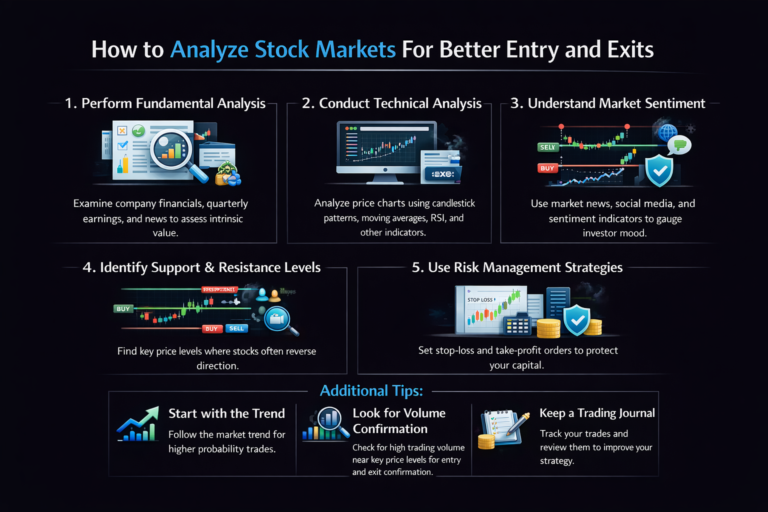
- Analysis Types: Understand the basics of technical analysis (price action, support/resistance) and fundamental analysis (earnings, economic data).
- Choose One Market: Start with one. For example, major forex pairs (EUR/USD) or large-cap stocks (like Apple or Microsoft) are less volatile than cryptocurrencies or penny stocks.
Common Mistake to Avoid: Jumping between stocks, crypto, and forex. Master one arena first.
Step 3: Develop and Test a Simple Strategy (Weeks 9-12)
A strategy is your rulebook. A simple one is best. For example: “I will buy stock ABC when its price bounces off this key support level on the daily chart, and the RSI indicator shows it’s oversold. I will place my stop-loss 2% below my entry and aim for a profit 1.5 times my risk.”
Formula for Success: Edge = (Win Rate * Average Win) – (Loss Rate * Average Loss). Your strategy must have a proven positive edge through testing.
Step 4: Paper Trade Relentlessly (Month 3-4)
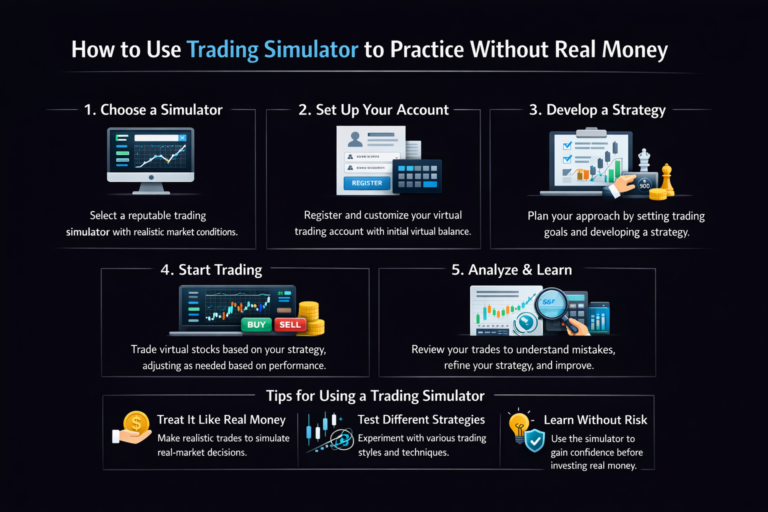
Execute your strategy in your demo account for at least two months. Treat it like real money. The goal is not to see big profits but to achieve consistency in following your plan and to see if your strategy works in different market conditions (trending, sideways).
Step 5: Start Live Trading with Minimal Capital (Month 5+)
Begin with the smallest position size your broker allows. The goal of your first 50 live trades is not to make money, but to not lose money while executing your plan perfectly. The pressure of real money will test your psychology; small sizes help you manage it.
How to Use This Roadmap in Your Daily Trading Routine
This roadmap translates into a daily and weekly routine.
Scenario 1: The Learning Phase (Months 1-4): Your daily task is education. Spend 1 hour reading/watching credible sources, 1 hour analyzing charts in your demo account, and 30 minutes reviewing your journal. Websites like Babypips (for forex) offer structured free courses.
Scenario 2: The Live Trading Phase (Month 5+):
- Pre-Market: Review the economic calendar. Analyze charts for potential setups that fit your strategy.
- Trading Session: Execute only the planned setups. No impulsive trades.
- Post-Market: Journal every detail of the trade (reason for entry, emotion, outcome). This review is where the real learning happens.
A beginner, Sarah, spent 3 months paper trading a simple support/resistance strategy on the EUR/USD pair. Her journal showed she was profitable but often exited winners too early out of fear. Recognizing this psychological leak, she worked on it. When she went live with a tiny $500 account, her focus was on sticking to her exit rules, not the money. In 6 months, she grew it to $650—a 30% return, but more importantly, she proved her process worked.”
Beginner Trading Strategies: Comparison Matrix
Choose your first strategy wisely. This matrix compares the most accessible approaches for beginners across critical dimensions.
Trend Following
Support/Resistance
Breakout Trading
Mean Reversion
Ride momentum using moving averages
Buy at support, sell at resistance levels
Enter when price breaks key levels
Fade moves expecting return to average
Let winners run, cut losers quickly
Clear stop and take-profit levels
Large moves justify smaller win rate
Small profits, must be highly accurate
Avoid choppy, range-bound markets
Works in clear support/resistance channels
Needs volatility for significant breaks
Requires mean-reverting behavior
Simple rules, works across timeframes
Visual approach, easy to understand
Many false breakouts can frustrate
Requires excellent timing and risk control
How to Read This Matrix:
- Beginner-Friendly: Clear rules, forgiving of minor errors
- Moderate Difficulty: Requires practice and discipline
- Challenging: Demands experience and precision
- Best Choice: Highest success probability for beginners
Key Insight for Beginners:
Start with Trend Following or Support/Resistance. These strategies have clear visual cues on charts and teach fundamental concepts. Master one completely before exploring others. Remember: a simple strategy executed perfectly beats a complex strategy executed poorly.
Common Mistakes When Starting to Trade
Pitfall 1: Not Using a Stop-Loss. Solution: A stop-loss order is non-negotiable. It is your pre-defined cost of being wrong. Always enter it immediately when you enter a trade.
Pitfall 2: Over-leveraging (Trading Too Big). Solution: Never risk more than 1-2% of your total trading capital on any single trade. This ensures a string of losses won’t wipe you out.
Pitfall 3: Revenge Trading (Trying to Immediately Win Back a Loss). Solution: After a loss, close the platform. Your job is to follow your plan, not to “get even.” The market doesn’t owe you anything.
Pitfall 4: Changing Strategies Too Often. Solution: Give any strategy at least 50-100 trades in your demo account to see its true performance. The enemy is often inconsistency, not the strategy itself.
- Removes Emotion: Provides a clear, step-by-step framework that helps override impulsive decisions during market stress.
- Manages Risk from Day One: Emphasizes capital preservation as the core principle, protecting beginners from catastrophic losses.
- Builds Real Skill: Treats trading as a learnable profession, not gambling, by focusing on education and practice.
- Creates Realistic Expectations: Sets a timeline of months, not days, tempering the “get rich quick” mentality that leads to failure.
- Establishes a Feedback Loop: The journaling component allows for objective self-analysis and continuous improvement.
- Requires Significant Patience: The initial months of learning and demo trading offer no financial reward, testing motivation.
- No Guarantee of Profit: Even with perfect execution, markets can be unpredictable. This method increases your odds but doesn’t eliminate risk.
- Emotional Challenges Persist: The framework helps, but the psychological pressure of live trading is inevitable and must be personally managed.
- Time-Consuming: Becoming consistently profitable requires treating it as a part-time job in terms of hours dedicated to learning and analysis.
- Can Be Isolating: Unlike a traditional job, you work alone. Discipline must be self-generated.
Find Your Edge: Which Trader Are You
Not all traders operate the same way. Your personality, schedule, and risk tolerance align with specific styles. Understanding this helps you choose the right market and strategy from the start, saving you months of frustration.
The Four Common Beginner Archetypes:
- The Day Trader: Holds positions for minutes to hours, closing all trades before the market closes. Requires intense focus, quick decisions, and access to low-latency platforms. High stress, high activity.
- The Swing Trader: Holds positions for several days to weeks, aiming to capture a “swing” in a market trend. Allows for more analysis time and suits those who can’t watch screens all day.
- The Position Trader: Holds for months to years, based on long-term fundamental trends. Least time-intensive but requires immense patience and conviction. More akin to active investing.
- The Scalper: Holds for seconds to minutes, aiming for tiny profits on high volume. Extremely demanding, requires top-tier technology, and is generally not suitable for retail beginners.
Actionable Exercise: Take a week to observe your natural tendencies. Are you patient or impulsive? Can you sit for hours or do you need quick results? Your answers will point you toward your natural trading style.
Your 12-Month Trading Journey Roadmap
Trading mastery is a marathon, not a sprint. This visual roadmap shows exactly what you should focus on each month to build skills systematically and avoid overwhelm.
Phase 1 Foundation (Months 1-3)
Month 1: Mental Preparation
- Read 2 trading psychology books
- Define your risk tolerance
- Set up demo account
- Commit to trading as a skill
Month 2: Market Mechanics
- Master order types (limit, stop, market)
- Understand bid/ask spread
- Learn about different markets
- Choose your primary market
Month 3: Chart Literacy
- Read candlestick patterns
- Identify support/resistance
- Add 2-3 basic indicators
- Start trading journal
Phase 2 Skill Development (Months 4-6)
Month 4: Strategy Selection
- Test 3 strategies in demo
- Choose one to specialize in
- Define entry/exit rules
- Create checklist for setups
Month 5: Risk Management
- Implement 1% risk rule
- Calculate position sizes
- Set stop-losses automatically
- Track risk/reward ratios
Month 6: Demo Consistency
- Execute 100+ demo trades
- Achieve 3 profitable weeks
- Review detailed journal
- Identify personal weaknesses
Phase 3 Live Execution (Months 7-9)
Month 7: Micro-Account Start
- Fund smallest possible account
- Trade smallest position sizes
- Focus on process, not profits
- Manage emotional reactions
Month 8: Pattern Recognition
- Identify your best setups
- Learn from losing trades
- Adjust strategy if needed
- Develop intuition for your edge
Month 9: Small Scale Profitability
- Achieve 2 consecutive profitable months
- Maintain strict risk discipline
- Scale up position sizes 25%
- Consider adding second market
Phase 4 Refinement (Months 10-12)
Month 10: Performance Analysis
- Calculate exact win rate & profit factor
- Analyze performance by day/time
- Optimize strategy parameters
- Eliminate unprofitable behaviors
Month 11: Scaling & Automation
- Increase capital allocation
- Explore semi-automated tools
- Add complementary strategy
- Teach concepts to another beginner
Month 12: Mastery Foundation
- Review full year’s journal
- Set goals for Year 2
- Consider mentorship role
- Plan continued education
Your Progress Check
Personalized Next Steps:
Select your current phase to see exactly what you should focus on next.
Roadmap Legend
Taking It to the Next Level
Once you’ve mastered a basic strategy and have 6 months of consistent, journaled live trading, you can explore advanced concepts to refine your edge:
- Quantify Your Edge: Move beyond gut feeling. Use your trade journal data to calculate your precise win rate, profit factor, and expectancy. This tells you mathematically if your strategy is viable long-term.
- Learn About Market Regimes: Understand how your strategy performs in trending vs. range-bound markets. Advanced traders often have a “playbook” for different conditions or know when to stay out.
- Introduction to Algorithmic Trading: Explore platforms like MetaTrader with MQL or Python with backtesting libraries to code and test your strategy algorithmically, removing emotion completely.
Trading vs Investing
A common beginner confusion is conflating trading with investing. They are related but fundamentally different activities.
| Feature | Trading | Investing |
|---|---|---|
| Time Horizon | Short-term (Minutes to Months) | Long-term (Years to Decades) |
| Primary Goal | Generate profits from price fluctuations | Build wealth through asset appreciation and compounding |
| Analysis Focus | Technical Analysis & Short-term Catalysts | Fundamental Analysis & Business Health |
| Activity Level | High (Frequent buying/selling) | Low (Buy and hold) |
| Mindset | Opportunistic, Tactical | Patient, Ownership-Oriented |
Conclusion
You now possess a realistic, step-by-step path to learn how to earn money through trading. Remember, the goal of this guide is not to make you money tomorrow, but to equip you with the skills and discipline to potentially generate consistent returns over the coming years. Success hinges on your commitment to the process: educate patiently, practice relentlessly, manage risk ruthlessly, and review your performance honestly.
Start today. Open a demo account, begin the free courses on Babypips or Investopedia, and commit to the first step. The market will be here waiting when you’re ready.
Frequently Asked Questions
Related Guides You Should Read Next:
- How to Perform Basic Technical Analysis: A Starter Guide
- Risk Management 101: How to Size Your Trades and Survive
- A Beginner’s Guide to Building a Trading Journal That Actually Improves Your Skills
About the Author